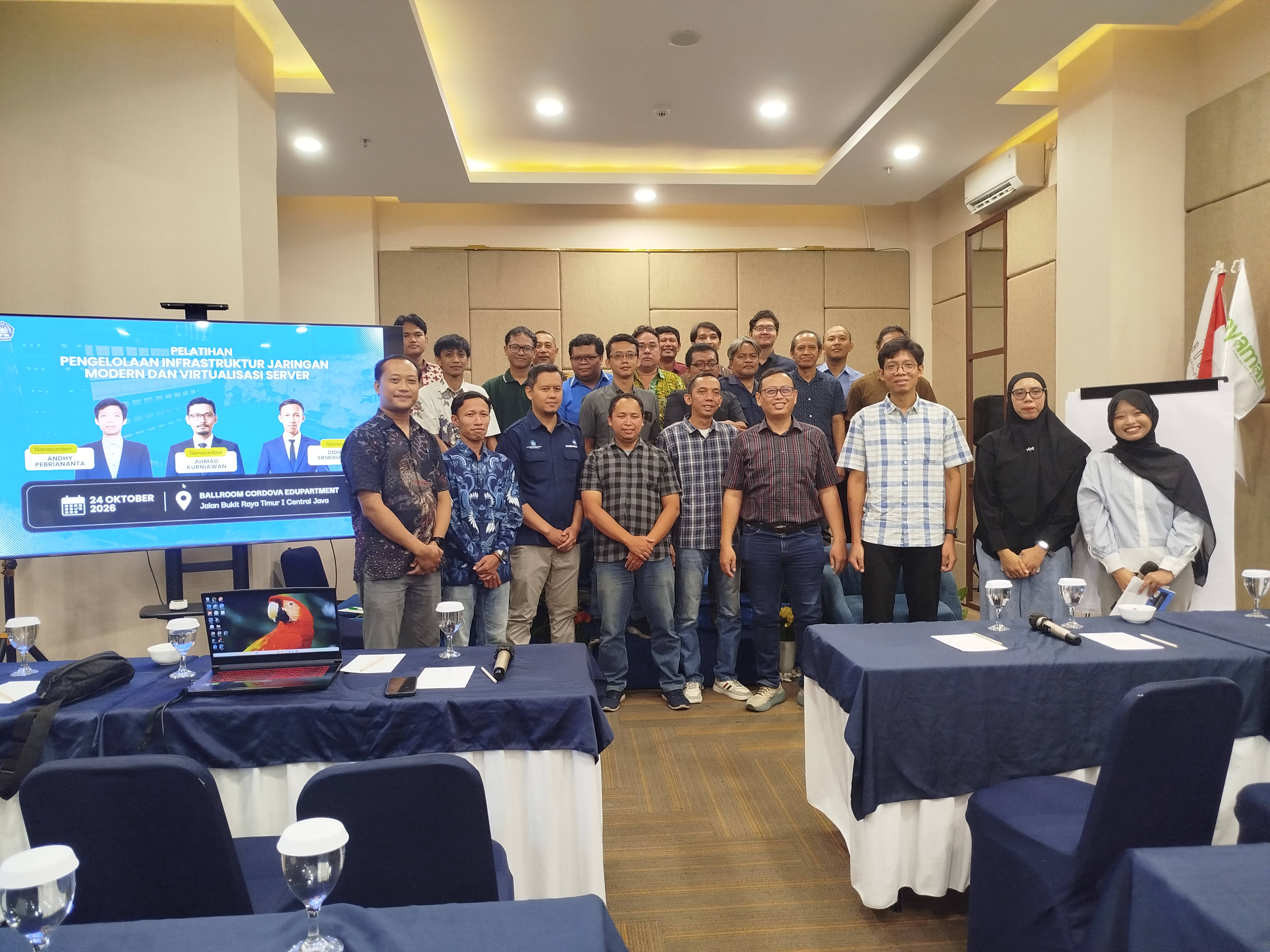
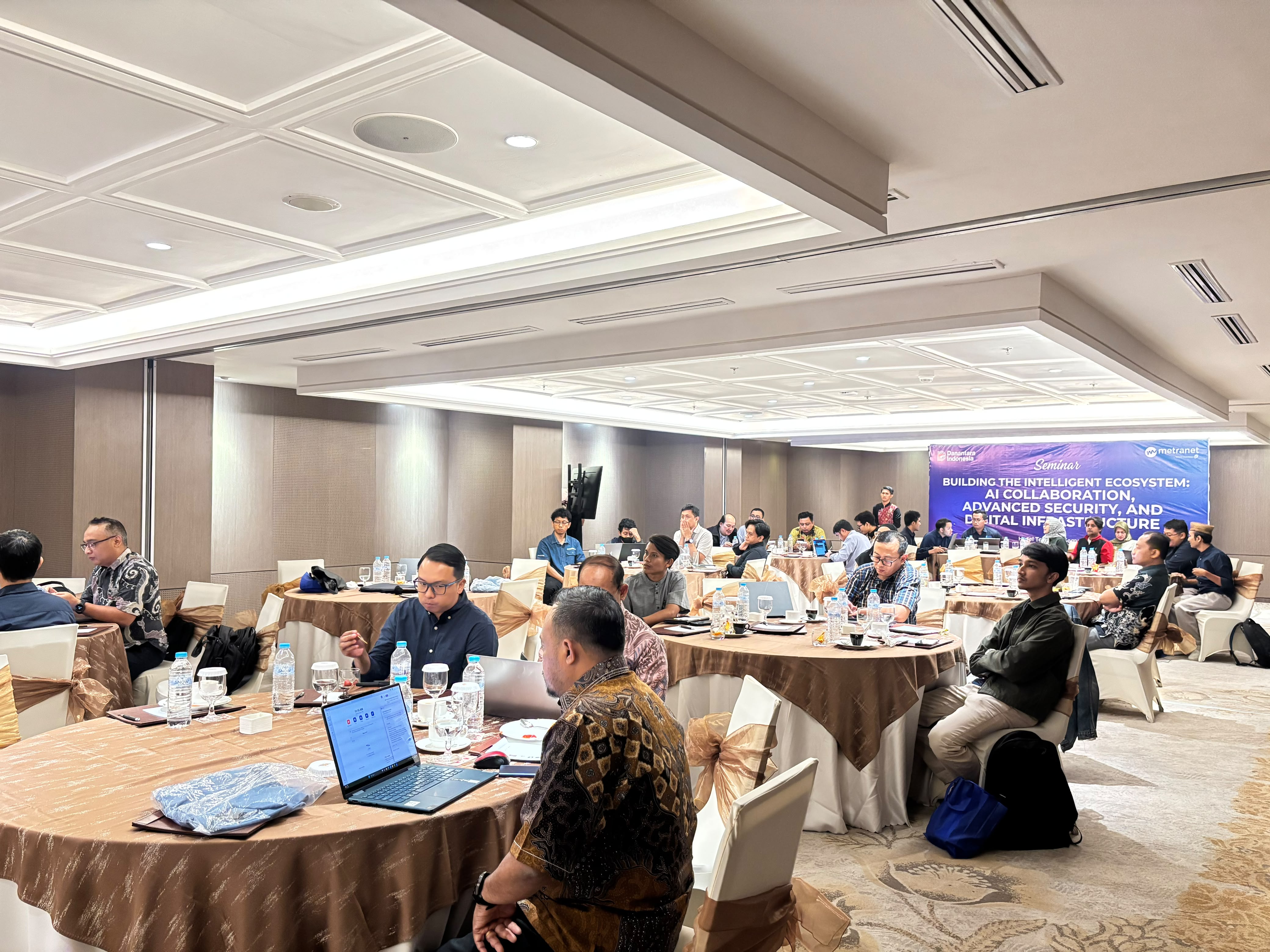
Semarang – To increase insight in the field of information technology and the development of digital transformation, six members of the Academic Support Unit for Information and Communication Technology (UPA ICT) Semarang State Polytechnic (Polines) took part in a seminar entitled “Building the Intelligent Ecosystem: AI Collaboration, Advanced Security, and Digital Infrastructure” on Tuesday, July 28 2026, at 09.00 WIB until completion, at the Tentrem Hotel Semarang.
The UPA ICT Polines team that took part in this activity was led directly by the Head of UPA ICT, Helmy, S.T., M.Eng., accompanied by the Secretary of UPA ICT, Atman Risnendi, and four other UPA ICT staff. This participation is an effort to broaden horizons and obtain the latest information regarding developments in artificial intelligence (AI) technology, cyber security, and the development of digital infrastructure which plays an increasingly important role in supporting higher education services.
This seminar presents discussions regarding AI technology collaboration, strengthening information system security, and the readiness of digital infrastructure to face organizational needs in the era of digital transformation. One of the materials presented was “Leading the Future of Growth with Hybrid AI” by Halim Kurniawan from Lenovo. This material discusses the development of AI technology, the Hybrid AI concept, and its use in educational and organizational environments.
In his presentation, the Hybrid AI concept is a relevant approach for educational institutions because it allows the use of AI while still paying attention to aspects of data privacy and security, development of more personalized learning experiences, data-based operational efficiency, as well as support for research and collaboration activities. Apart from that, the material also reviews the readiness of AI supporting infrastructure, starting from computing devices, servers, data storage, to data center technology.
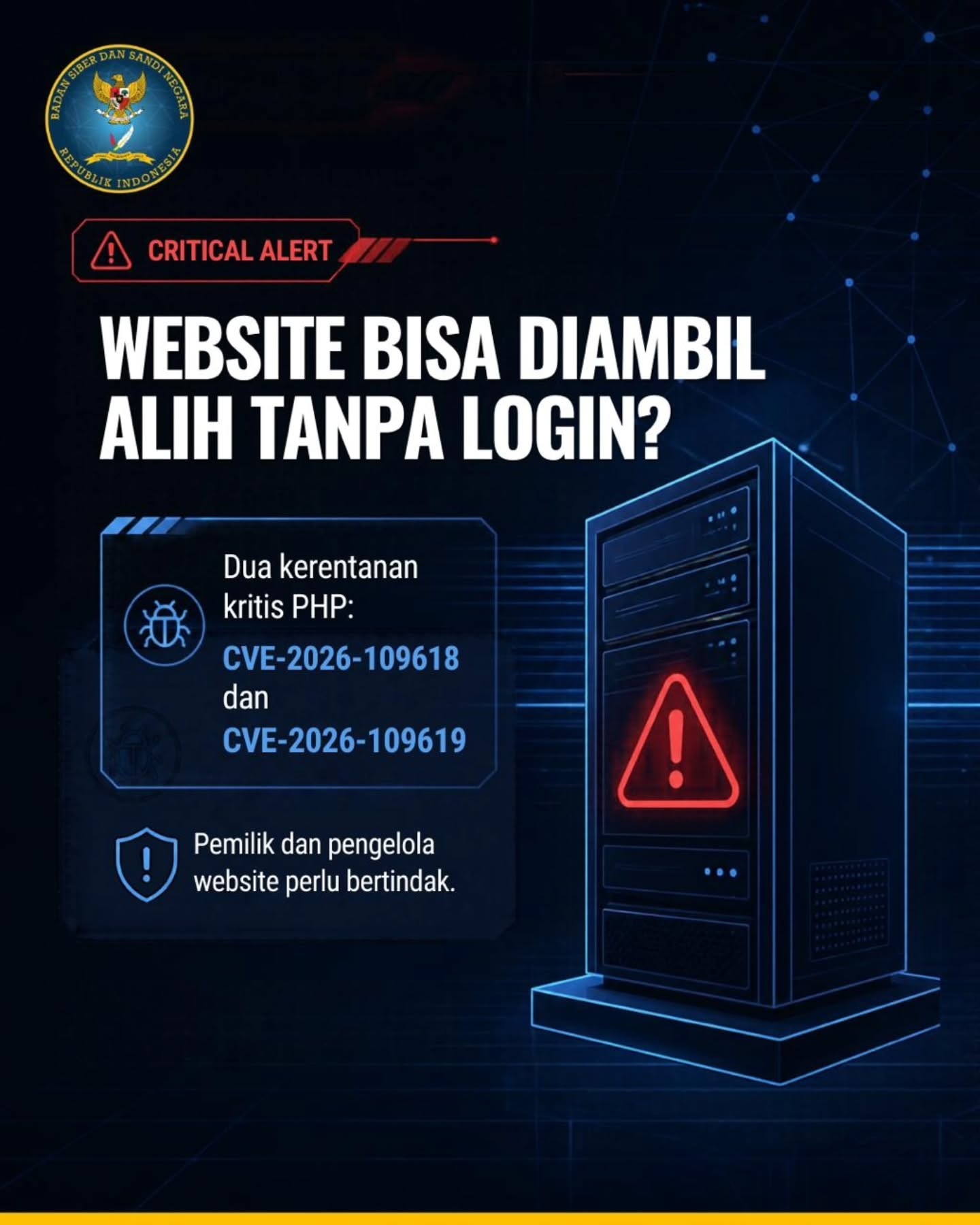
The next discussion highlights the security aspects of applications and APIs (Application Programming Interface) in the AI era through the material "Application and API Security Challenges in the AI Era" delivered by Ferdy Firmansyah, Technical Consultant from Central Data Technology. This material raises various cyber security threats that have the potential to attack organizational information systems, such as web defacement, brute force attacks, SQL injection, cross-site scripting (XSS), and misuse of APIs. The speaker also emphasizes the importance of implementing comprehensive application and API security, including strengthening authentication, setting access rights, data protection, monitoring system activity, and managing vulnerabilities. security. This is an important concern for information technology managers, considering the increasing number of organizational services that are integrated with each other through applications and APIs.
For UPA ICT Polines, the various materials obtained in this seminar have direct relevance to the management of information technology services in the campus environment. Developing reliable digital infrastructure, using AI technology appropriately, and increasing application and data security are important parts in supporting the continuity of academic and non-academic services.
Through participation in this activity, the UPA ICT Polines Team is expected to be able to gain new insights, enrich technological references, and identify opportunities for implementing innovations that suit institutional needs. It is also hoped that the knowledge gained can be used as material for consideration in developing information systems, improving the quality of information technology infrastructure, and strengthening cyber security in the Polines environment.
This participation is also a form of UPA ICT Polines' commitment to continue to follow technological developments and improve the quality of digital services to support the realization of an adaptive, safe, intelligent and sustainable higher education ecosystem.